
Docker containerisation services
We write Dockerfiles for each of your apps and a Docker Compose file so developers can start the whole stack on a laptop with one command.

Softfix is a Kubernetes consulting company in India. We package your apps into containers, set up the clusters they run on and stick around to keep them healthy, whether that's one small service or a few hundred.

Some clients come to us with nothing containerised yet. Others already run Kubernetes and want help keeping it under control. Here's what we can take on.
We write Dockerfiles for each of your apps and a Docker Compose file so developers can start the whole stack on a laptop with one command.
Standard or Autopilot, single zone or regional. We set up the cluster, networking and Workload Identity, then handle upgrades and node pool changes over time.
The same care on AWS and Azure. Clusters are built with Terraform so you can recreate them, and access is tied to your existing IAM or Entra ID accounts.
Smaller base images, no root user and scans on every build. Images with serious vulnerabilities get blocked before they reach your container registry.
Encrypted traffic between services, retries, traffic splitting and a clear picture of who talks to whom. We help you pick the mesh that fits, then roll it out one namespace at a time.
Our Helm chart development services turn your manifests into versioned charts with sensible defaults. For apps that need more care, we write Kubernetes operators that handle backups, failover or upgrades on their own.
The Horizontal Pod Autoscaler adds pods when load rises. The Cluster Autoscaler, or Karpenter on AWS, adds nodes when those pods need somewhere to run. We tune both so you scale fast without overpaying.
Dev, staging and production clusters, or clusters in several regions, all managed from one place with GitOps tools like Argo CD or Flux.
Readiness probes, pod disruption budgets and rolling or canary updates mean users don't notice when you release. A zero-downtime rollout should be the normal case, every time.
Policy as code with Kyverno or OPA Gatekeeper stops risky settings at the door, such as privileged containers or images from unknown registries.
We containerise the monolith as it is first, so it runs on Kubernetes. Then we pull out services piece by piece, where splitting actually helps.
We look at resource requests, idle nodes and storage, then right-size workloads and move suitable jobs to spot or preemptible nodes.
All three run standard Kubernetes, so your apps will work on any of them. The bigger question is which cloud the rest of your systems already live on.
| Point of comparison | Amazon EKS | Azure AKS | Google GKE |
|---|---|---|---|
| Control plane cost | Hourly fee per cluster | Free tier available; paid tier adds an uptime SLA | Hourly fee per cluster, with a monthly credit that covers one cluster |
| Hands-off mode | EKS Auto Mode, or Fargate for serverless pods | AKS Automatic, or virtual nodes | Autopilot, which manages nodes for you |
| Upgrades | You trigger version upgrades | Auto-upgrade channels you can opt into | Release channels with automatic upgrades |
| Identity | AWS IAM with Pod Identity | Microsoft Entra ID | Google Cloud IAM with Workload Identity |
| Good fit for | Teams already deep in AWS | Microsoft shops and .NET workloads | Teams who want the most automated experience |
Verdict: Our honest take: GKE tends to need the least babysitting, EKS has the widest set of AWS integrations, and AKS makes the most sense if you're already on Azure. Moving clouds just for Kubernetes is rarely worth it.
| Point of comparison | Kubernetes | Docker Swarm | Amazon ECS |
|---|---|---|---|
| Learning curve | Steep at first | Gentle if you know Docker Compose | Moderate, mostly AWS concepts |
| Where it runs | Any cloud or your own servers | Anywhere Docker runs | AWS only |
| Ecosystem | Huge: Helm, operators, service mesh, GitOps | Small and quiet | Tight AWS integration |
| Best for | Growing platforms and multi-cloud plans | Small teams with a few services | AWS teams who want less to manage |
Verdict: If you only run a handful of containers on AWS, ECS might be all you need, and we'll say so. Container orchestration services should match the size of the problem.
Kubernetes scales at two levels. Pods scale with traffic, and nodes scale to make room for those pods. Drag the slider to see both at work.
Note: Example numbers: each pod handles about 200 requests per second at the 70% CPU target, and each node fits 4 pods. Your real values come from load testing.
Every container needs CPU and memory requests. Without them, neither autoscaler can make good decisions.
Tell the HPA a target, such as 70% CPU, plus a minimum and maximum pod count. It adds or removes pods to stay near that target.
When new pods can't fit, the Cluster Autoscaler or Karpenter adds nodes. When load drops, it drains and removes the spare ones.
We push traffic at the system, watch how fast it reacts and adjust thresholds until scaling keeps up without wasting money.
This is the route we follow for most moves, including when we containerise a legacy application with Docker for the first time.
We note what each app needs to run: config files, ports, storage, background jobs and anything hard-coded to one server.
Config moves to environment variables and secrets. A Docker Compose setup lets your team test it locally.
We write Helm charts with health checks, resource limits and the right storage for anything stateful.
The app runs in a staging cluster next to the old setup until tests and real usage show it behaves the same.
Traffic moves gradually to the cluster. The old servers stay up until you're confident, then get switched off.
Most container security problems start in the image itself. These are the checks we put in place for every client, and the pipeline enforces them so nobody has to remember.
Distroless or Alpine images carry far fewer packages, so there's less to patch.
Compilers and build tools stay in the build stage and never ship to production.
If someone breaks into the container, they don't get root on it.
Tools like Trivy or Grype check for known CVEs before the image is pushed.
Cosign signs each image, and the cluster refuses anything unsigned.
Exact tags or digests mean you always know what's running. No surprise "latest".
A service mesh handles encryption, retries and traffic rules between your services so your code doesn't have to. The two main options take quite different approaches.
Packed with features: detailed traffic routing, fault injection, strong security policies and support for multi-cluster setups. Its ambient mode removes the need for a sidecar in every pod, which cuts resource use. The trade-off is more to learn and more to operate.
Pick it if: you need fine-grained traffic control or run a large, complex platform.
Built to be simple. It installs quickly, its Rust-based proxy is light on memory, and mutual TLS works out of the box. It has fewer knobs than Istio. Check the current licensing terms for stable releases before you commit.
Pick it if: you mainly want encrypted traffic and good metrics without much setup.
One cluster in one region is a single point of failure. For apps that can't go down, we spread the load across regions.
Region A (Mumbai)
Cluster 1 (4 pods)
Region B (Singapore)
Cluster 2 (4 pods)
Both clusters serve real traffic. If one region has trouble, the load balancer sends everyone to the other.
GitOps keeps every cluster in sync from the same repo. Federation tools can share services and policies between them.
The hardest part of a multi-region design is the database. We plan replication and failover with you before anything else.
Clusters that keep patient data encrypted in transit and at rest, with network policies, audit logs and access rules that support HIPAA requirements.
You may not need Kubernetes yet. If you do, we'll set up a small managed cluster that's cheap to run and easy to grow.
Shared clusters with namespaces per team, policy as code and cost reports per department, so the platform team stays in control.
Older apps can still move. We containerise what you have today and modernise it in steps, without a risky big-bang rewrite.
The price depends on how many apps you're moving, how many clusters you need, your cloud provider and whether you want us to run things afterwards. Every quote is fixed and written down before work starts.
A review of your containers and clusters, with a plan to fix what we find.
As your Kubernetes implementation company, we containerise your apps and build production-ready clusters.
We look after your clusters month to month, including upgrades and on-call.
 DevOps
Explore advanced DevOps solutions from Softfix Technologies, including CI/CD automation, infrastructure as code, cloud optimization, and streamlined deployment workflows.
Learn more DevOps
Softfix Technologies delivers CI/CD automation solutions that streamline testing, integration, deployment, and software releases for faster and reliable delivery.
Learn more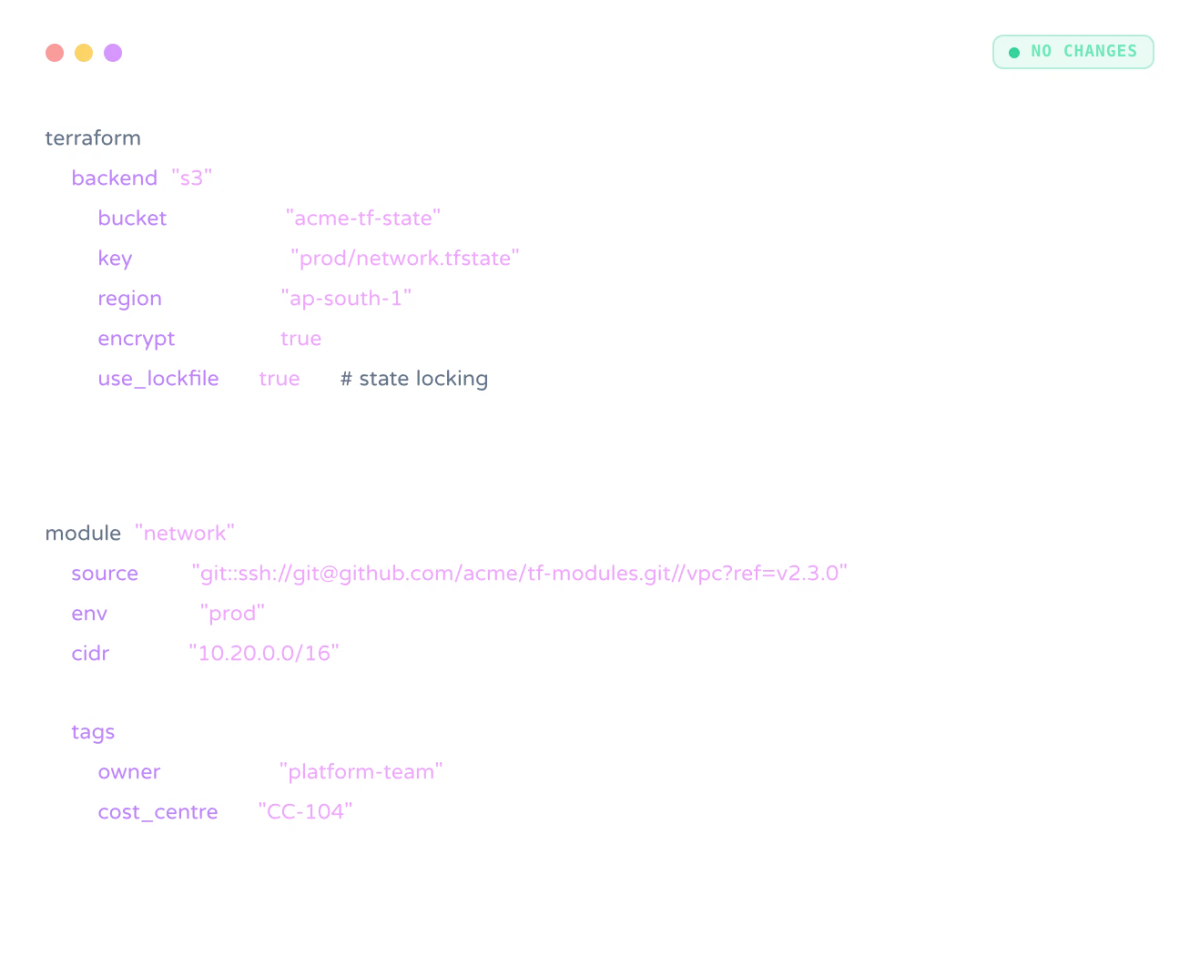 DevOps
Softfix Technologies delivers Infrastructure as Code solutions to automate cloud infrastructure, simplify deployments, improve consistency, and support scalable DevOps workflows.
Learn more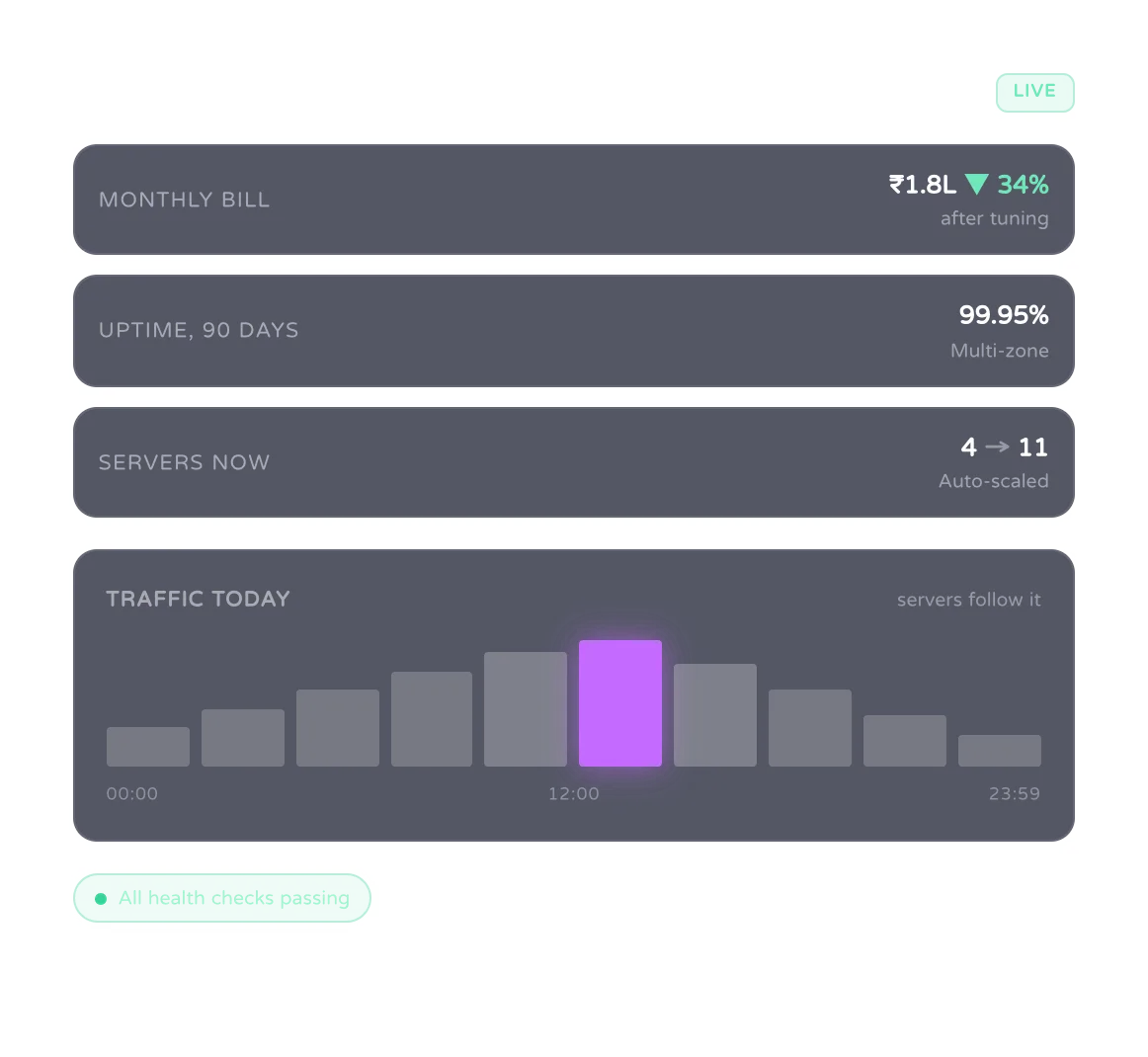 Cloud Development
Softfix Technologies provides cloud application development services to build secure, scalable, and high-performance cloud-based applications customise to business requirements.
Learn moreTell us what you run today and where you want to get to. We'll reply with honest advice, even if that means you don't need Kubernetes yet.
[email protected]
Phone
+91 81890 10044
Address
1st Floor, CP/140, Viraj Khand-4, Gomti Nagar, Lucknow, Uttar Pradesh 226010
to help our experts understand your business objectives and create your customized plan.