

Your phone keeps ringing with “where’s my order?”
Customers call because they can’t see where their shipment is. Your team calls the driver, then calls the customer back. Every single time.

We build fleet management systems, shipment tracking, driver apps and warehouse software for transporters, courier companies and delivery startups.

Plenty of transport businesses run on Excel, phone calls and a WhatsApp group for drivers. It holds together for a while. Then one busy week, it doesn’t.
Customers call because they can’t see where their shipment is. Your team calls the driver, then calls the customer back. Every single time.
Routes come from whoever has done that run before. Some trucks go out half empty while others make an extra trip on the same lane.
Proof of delivery is a signed paper slip that may or may not make it back to the office. Billing waits until it does.
You can see total revenue and total fuel spend. You can’t easily tell which route, customer or vehicle is quietly losing money.
GPS lives on one portal, orders in the ERP, stock in the WMS. Someone in the office types the same details into all three.
Growth should be good news. Instead, ten more trucks or two more cities means more calls, more errors and longer evenings for your control room.
You can get an app built almost anywhere. Getting one your drivers will actually use on the road is a different job.
| What matters | Softfix | Typical agency |
|---|---|---|
| Starting point | We map your lanes, vehicles, warehouses and current tools before suggesting anything. | A feature list and a quote, often after one call. |
| Rollout | Go live on one lane or warehouse first, fix what the pilot shows, then expand. | One big launch across the whole business. |
| Driver app | Designed for drivers on the move, with large buttons, Hindi and English, and offline mode. | Built and tested on office Wi-Fi. |
| Integrations | GPS devices, ERP, WMS, e-way bill and payment gateways connected through their APIs. | Integrations quoted later as “extra scope”. |
| Hosting & DevOps | We set up and run the cloud side too, with the option to host in India. | You find a separate vendor for servers. |
| After launch | 24×7 support, new lanes and new modules as you grow, plus marketing if you need it. | A short warranty period, then hourly billing. |
 On road
 Warehouse
 Last mile
The process stays the same whatever your size. What changes is how many lanes we roll out to and how many systems we connect.
Transporters & fleet owners
Trip planning, vehicle documents, fuel logs and service reminders in one place, so your fleet manager isn’t chasing paperwork.
Courier & 3PL companies
Booking, hub scans, tracking and proof of delivery, plus a portal your business customers can use without calling anyone.
Delivery startups
Rider, customer and admin apps for last-mile or hyperlocal delivery. We help you launch with what matters and add the rest later.
Manufacturers & distributors
Outbound dispatch, dealer deliveries and warehouse stock tied into the ERP you already run.
Think of it as one platform made of modules. Most clients start with tracking or fleet and add the others once the first one is in daily use.

Vehicles, drivers, fuel, servicing, permits and insurance renewals tracked together, with reminders before anything expires.

Live location and status for every consignment, with ETAs your customers can check for themselves on WhatsApp, SMS or a link.

Trips, stops, proof of delivery with photo and OTP, fuel entries and expense receipts. It saves everything offline and syncs later.

Plans stops in a sensible order based on distance, time windows and vehicle capacity, so each vehicle covers more drops per day.

Inbound, putaway, picking, packing and dispatch, with barcode scanning and stock levels that are actually up to date.

Customer, rider and admin apps for parcel, hyperlocal or B2B delivery, with automatic order assignment and live tracking.

Your clients book shipments, track them and download invoices and PODs on their own, which means fewer calls to your office.

Cost per km, per trip, per lane and per customer. See which routes earn well and which ones need a second look.
The customer asks, the office calls the driver, the driver is on the highway and doesn’t pick up.
WHAT WE BUILDCustomers check the link themselves, and your team gets its afternoon back.
Routes are planned from memory. Vehicles cross paths, run half full, or come back for a stop they missed.
WHAT WE BUILDLess fuel burnt, and more deliveries out of the same fleet.
Signed delivery slips get lost or arrive a week late, and invoices sit until they turn up.
WHAT WE BUILDYou get paid sooner, and there are fewer disputes over what was delivered.
Orders in the ERP, stock in the WMS, vehicles on the GPS portal. Office staff copy details between them all day.
WHAT WE BUILDData gets entered once, and the numbers match across every system.
Festive rush or month-end, the old software can’t keep up just when you need it most.
WHAT WE BUILDThe platform holds up on your busiest day, and you only pay extra when traffic actually rises.
By the time someone compiles the report, the problem lane has already cost you another few weeks.
WHAT WE BUILDYou spot the loss-making lane this week, not next quarter.

AI, once the data is flowing
Smarter features you can add later
AI needs clean data to be useful. So we usually get tracking and trips running first, and then add these once there are a few months of history to learn from.
Delay prediction
Flags trips that are likely to run late, early enough for the control room to call the customer before they call you.
Automatic dispatch
Assigns new orders to the right vehicle or rider based on location, capacity and what’s already on their list.
Demand forecasting
Looks at past volumes by lane and season, so you can line up vehicles and staff before the rush instead of during it.
Document reading
Pulls details from invoices, LRs and delivery slips automatically, so nobody has to type them into the system by hand.
Six steps, with a pilot in the middle so you see real results before committing to a full rollout.
We look at your lanes, vehicles, warehouses and the tools you use today. We also talk to a few drivers and the control room, not just management.
Separate flows for drivers, the control room, customers and management. You click through a prototype before we write any code.
Two-week sprints, each ending with a demo. GPS, ERP, WMS, e-way bill and payments get connected along the way.
The system runs live on a single lane or warehouse. We fix whatever real drivers and real loads bring up.
We add the remaining lanes, branches and partners in stages, and train each team as their part goes live.
24×7 support, monitoring and updates. New lanes, new modules and AI features get added as your business needs them.
A logistics platform handles addresses, phone numbers, invoices and payments for a lot of people. We treat that seriously from the first week.
We pick the stack based on your scale and monthly budget. A 30-vehicle fleet doesn’t need the same setup as a national courier network.
Apps that work on the road
Control room and portals
The engine behind the platform
Where every truck really is
Storage that keeps up
Hosting, scaling and releases
One build fee, then a monthly charge for hosting and support. You get a written quote after our first call.
One module, such as tracking or fleet management, running on a single lane or warehouse.
Fleet, tracking, driver app and customer portal for one region, connected to your ERP and WMS.
A multi-region platform with single sign-on, detailed role control and a dedicated team that works only on your product.
No two fleets are alike, so we don’t quote from a price list. These are the things that move the number up or down.
A tracking dashboard alone is a much smaller job than separate driver, customer and admin apps.
Live tracking, instant alerts and auto-dispatch need more backend work than daily status updates.
Each connection to an ERP, WMS, GPS vendor or government portal adds testing and setup time.
Ten vehicles and ten thousand orders a day need very different hosting and architecture.
Driver apps that work without signal and in regional languages take extra design and testing.
Route optimisation, delay prediction and document reading add scope, though they often pay for themselves in fuel and staff time.
We’re a team of 30+ developers, designers and testers in Lucknow, with a second office in Toronto for clients in Canada and the US. Many clients come to us after juggling separate vendors for code, hosting and marketing. We handle all three, and we write documentation as we go so the system never depends on one person.
Some clients stayed with us because we told them which features to leave out.
300+
Projects shipped
30+
In-house experts
15+
Industries served
ISO
9001:2015 · 27001:2022
 Industries
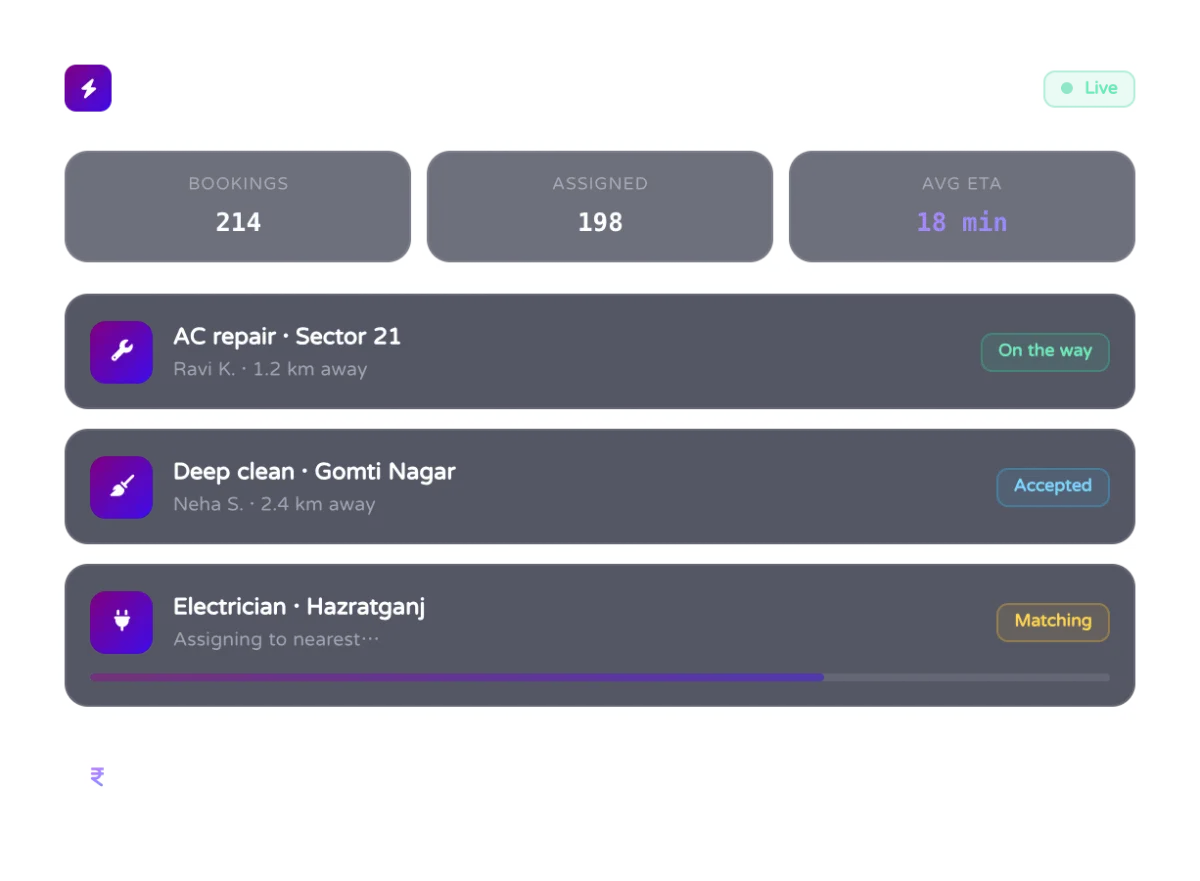
Softfix builds on-demand apps that hold up on busy days — customer apps, provider apps and admin panels with dispatch, live tracking, UPI payments and provider payouts.
Learn more Industries
Empower financial businesses with Softfix fintech solutions. Build secure financial applications, digital payment systems and scalable platforms customized to your needs.
Learn more Industries
Transform media experiences with Softfix software solutions. Build streaming platforms, content management systems and interactive digital applications for modern audiences.
Learn more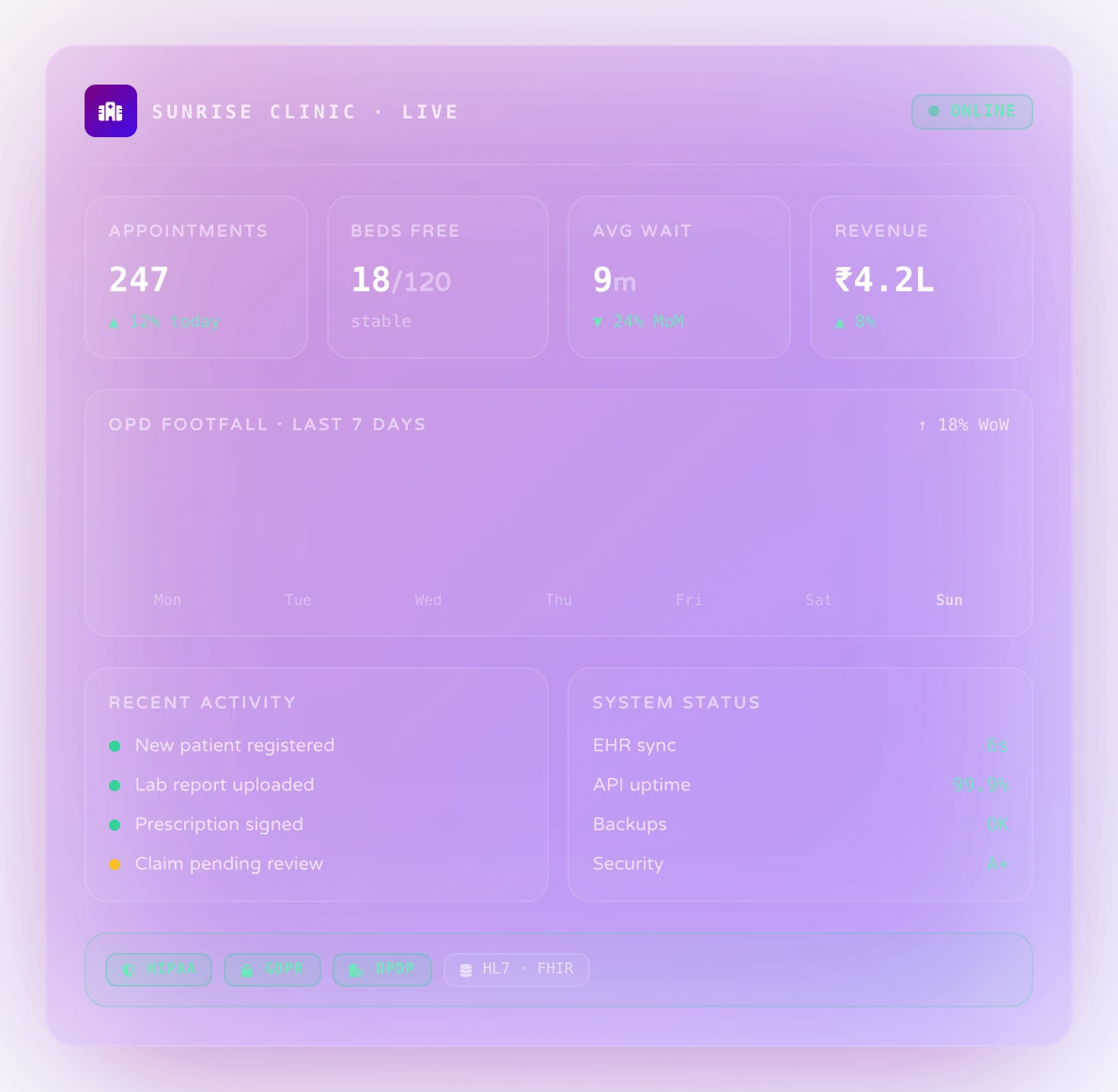 Industries
Simplify healthcare operations with Softfix healthcare software solutions. Develop secure, scalable digital systems for patient management, clinical workflows and care delivery.
Learn moreBook a free 30-minute call. Tell us about your lanes, your vehicles and where things get stuck, and we’ll suggest a sensible first step.
[email protected]
India
+91 81890 10044
Canada
+1 (647) 846-9494
India office
1st Floor, CP/140, Viraj Khand-4, Gomti Nagar, Lucknow, Uttar Pradesh 226010
Canada office
2 Bloor Street West, Suite 700, Toronto, Ontario M4W 3E2
to help our experts understand your business objectives and create your customized plan.