


Your pickers are walking the same aisle three times. Stock shows up in Tally but nobody can find it on the rack. And every month-end, someone spends two days building client invoices in Excel. Sound familiar? That's usually when warehouse owners start asking about warehouse management software development cost, and the answers they get swing wildly.
One vendor offers a plan at ₹3,000 a month. Another quotes ₹35 lakh. Both can be honest, because they're selling very different things. In this guide you'll see indicative price ranges for custom builds and ready-made WMS software in India, the features that push the price up, what 3PL billing, scanners and GST add, and the running costs that appear after go-live. You'll also get a checklist for comparing quotes.
- A custom WMS for one warehouse often costs ₹4 lakh to ₹12 lakh, multi-site setups ₹12 lakh to ₹30 lakh, and 3PL platforms with billing ₹28 lakh or more.
- Sites, clients and integrations move the price more than the number of SKUs.
- Ready-made WMS plans suit most single sites; budget scanners, printers, Wi-Fi and 15% to 20% of build cost a year for support if you go custom.
What a WMS Does and When a Custom One Makes Sense
A warehouse management system, or WMS, runs everything that happens to stock inside your four walls. It records the truck at the gate, checks the goods against the purchase order, tells a worker which bin to put them in, builds pick lists, confirms each pack by scan and hands the parcel to the courier. Basic inventory management software tells you that you have 400 units. A WMS tells you which rack they're on, which batch they belong to and who touched them last.
Most single warehouses can start with ready-made software, and that's often the smart move. If you run one site with standard inward, picking and dispatch, a cloud plan will cover you for a fraction of a custom build. For a small operation, the warehouse management software development cost simply isn't worth paying yet.
Custom becomes worth a look when the product starts fighting you. Maybe you're a 3PL with six clients, each with different storage rates and SLAs. Maybe you're a D2C brand whose returns and kitting rules no tool handles. Or you're a distributor with batch and expiry rules tied to your own ERP. That's when the warehouse management software development cost question changes. You stop paying rent for a product and start paying a team to build something that fits how your floor already works.
Warehouse Management Software Development Cost in India: 2026 Ranges
Here's the straight answer first. There's no fixed price, because "WMS" can mean a stock register with a barcode screen or a multi-client platform with billing and portals. Still, 2026 guides published by Indian developers fall into fairly consistent bands for custom builds.
Use these as budgeting starting points, not quotes:
| Warehouse profile | Typical scope | Indicative custom build cost (INR) | Typical timeline |
|---|---|---|---|
| Single warehouse moving off Excel | GRN, SKU and bin master, putaway, pick-pack-dispatch, scanner app, basic reports | ₹4 lakh to ₹12 lakh | 10 to 14 weeks |
| Growing brand or distributor | Above plus several sites, batch and expiry, cycle counts, returns, courier APIs | ₹12 lakh to ₹30 lakh | 4 to 7 months |
| 3PL with multiple clients | Above plus client-wise stock, contract billing, client portal, SLA dashboards | ₹28 lakh to ₹45 lakh or more | 5 to 8 months |
| Automated or enterprise site | Above plus conveyor or sorter links, slotting, forecasting, high availability | ₹50 lakh and above | 9 months or more, in phases |
Takeaway: the number of sites, clients and integrations moves your warehouse management software development cost more than the number of SKUs you stock.
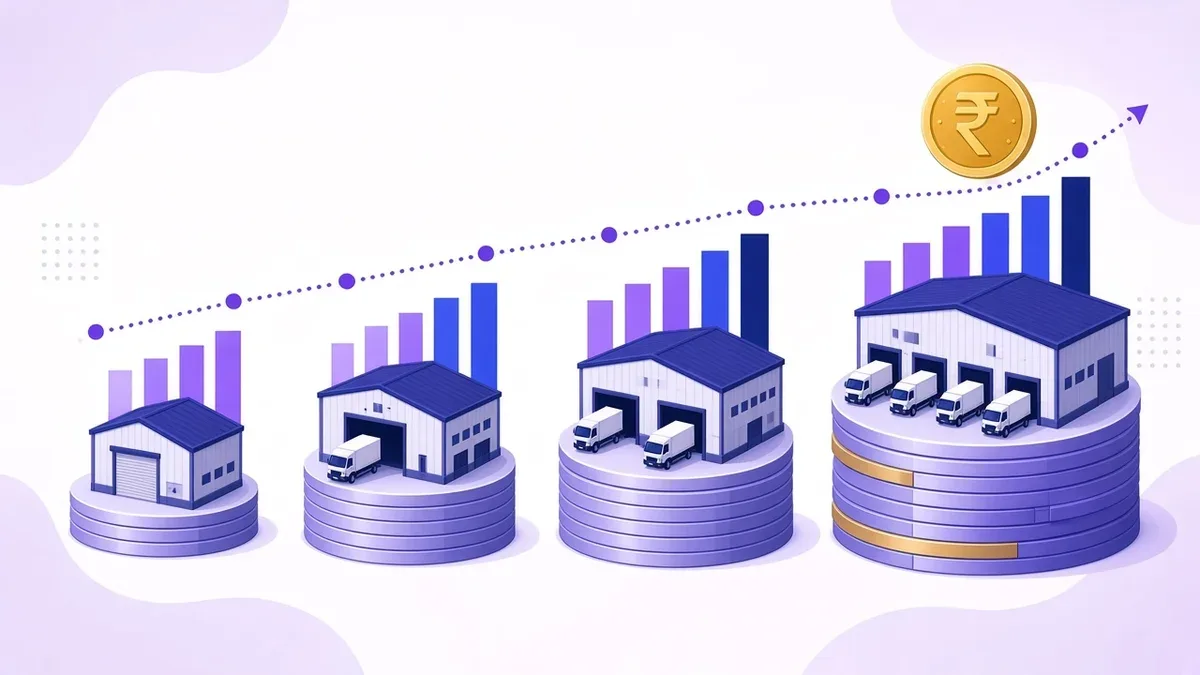
Why such wide bands? One vendor's "complete WMS" may skip directed putaway, while another includes it with offline scanning and three courier links. A ₹2 lakh quote for a "full" system is usually a stock register with a login page. Always ask what's inside the number, and get every warehouse management software development cost quote broken down by module.
What Drives Warehouse Management Software Development Cost?
Six things decide most of the warehouse management software development cost. If you know where you stand on each, you can predict your quote before a vendor sends it.
Sites, zones and the location model
A single godown with racks and bins is simple. A multi-floor site with staging lanes, quarantine areas and cold rooms needs a deeper location model and more testing. Every extra site adds setup, transfers and reports.
Picking strategy
Single-order picking is cheap to build. Wave, batch, zone and cluster picking, with a suggested path through the aisles, is real algorithm work. Most D2C warehouses need batch picking once they cross a few hundred orders a day.
Batch, serial and expiry rules
Pharma, FMCG and food businesses need FEFO picking, recalls and lot traceability. Electronics needs serial capture at dispatch. Each rule adds screens, checks and reports.
Integrations
Every ERP, marketplace, store or courier link brings its own testing and error handling. Published guides suggest one to three weeks of work per integration, which is why integration count drives so many quotes. Two warehouses of the same size can see a very different warehouse management software development cost because of this alone.
Offline scanning and devices
Steel racks kill Wi-Fi signals. A scanner app that queues scans offline and syncs later costs more to build, but it stops picking from freezing in dead zones. Regional language screens help floor accuracy too.
Multi-client billing
For 3PLs, billing is a product in itself. Storage per pallet per day, handling per carton and value-added services all need rules, rate cards and invoices. This one module can add lakhs to the warehouse management software development cost.
Core WMS Features and What Each Adds to the Budget
Not every module is equal. Some are must-haves for any warehouse, and others only make sense at a certain volume. Splitting your list this way is the easiest way to keep the first release lean. Trimming modules is also the quickest way to cut warehouse management software development cost without hurting daily work on the floor.
Here's how common modules affect the budget:
| Module | What it covers | Effect on budget |
|---|---|---|
| Inbound and GRN | Gate entry, PO matching, damage capture, goods receipt | Low; needed by everyone |
| Bin locations and putaway | Zone, rack and bin master, directed putaway rules | Low to medium |
| Picking and packing | Pick lists, scan-to-confirm, pack checks, labels | Medium; higher for wave or batch picking |
| Batch, serial and expiry | Lot capture, FEFO or FIFO, recalls, ageing reports | Medium |
| Cycle counting | Blind counts, variance approval, audit trail | Low to medium |
| Returns and RTO | Condition grading, restock or quarantine, refund triggers | Medium |
| Client portal and 3PL billing | Client-wise stock, rate cards, invoices, SLA views | High |
| Dashboards and reports | Dock-to-stock time, pick accuracy, ageing stock | Low to medium |
Takeaway: start with inbound, bins, picking and dispatch, then add billing and portals once the floor is stable, so your warehouse management software development cost tracks real needs.
Every good WMS keeps a full audit trail of every stock movement, with the user, device and time. It sounds dull, but it's what settles client disputes. If a vendor treats it as an extra, that's a red flag.

Building a Warehouse Management System for 3PL Operators
A warehouse management system for 3PL work is a different animal. You're not just tracking your own stock. You're holding goods for several brands, each with its own SKUs, rules and contract. Mixing their stock, even once, can cost you a client. That's why the warehouse management software development cost for a 3PL sits higher than for a single brand.
The core extras are client-wise inventory, client-specific putaway and picking rules, and a portal where each brand can see its own stock and orders. Most clients also want daily reports and API access, so their store or ERP can push orders without email.
Billing is where most 3PLs leak money. If storage, handling and value-added charges are worked out in Excel at month-end, small misses add up fast. A billing engine reads every movement, applies the right rate card and drafts the invoice. It costs more to build, but it often pays for itself. For many operators this module alone justifies the warehouse management software development cost, and it's also the part that's hardest to bolt onto a ready-made tool later.
Plan SLAs into the design, too. Dispatch cut-off times, pick accuracy and dock-to-stock time should show on a dashboard per client. You can see how we approach logistics software development at Softfix.
Hardware, Integrations and GST: Costs Most Quotes Leave Out
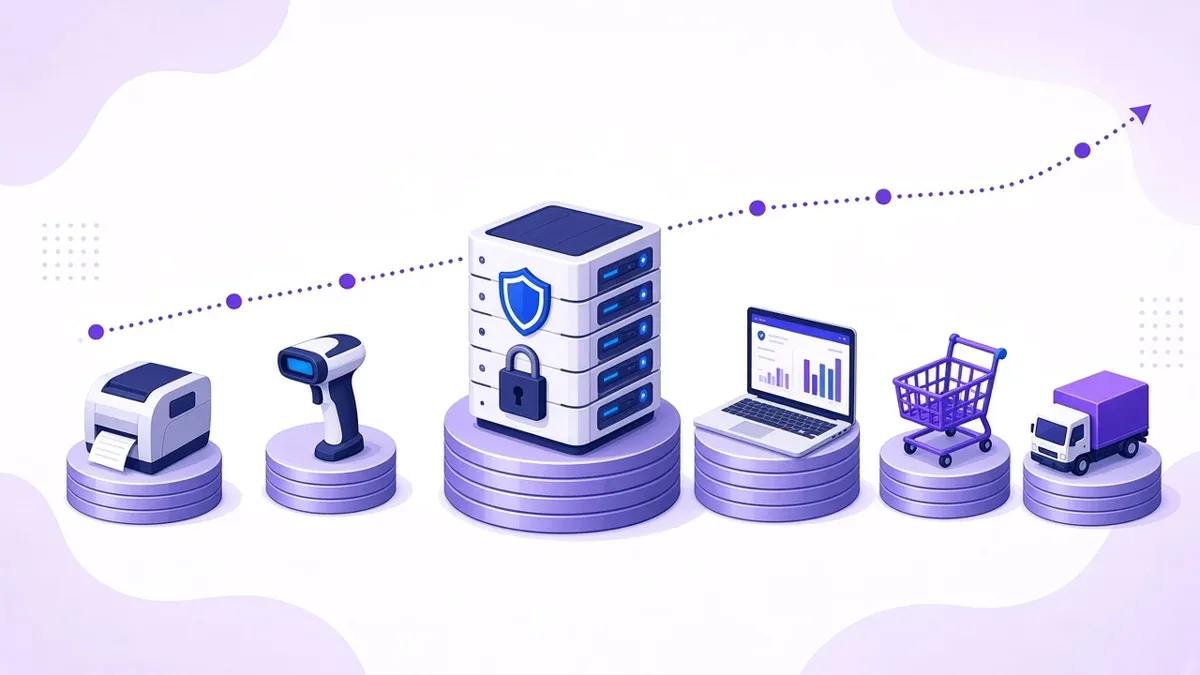
The software quote is only part of the bill. Scanners, label printers, Wi-Fi and integrations often sit outside it, and they can add a lot to your first-year spend. Plan for them from day one, because they belong in your total warehouse management software development cost, not in a surprise invoice later.
Here are planning ranges taken from published Indian vendor guides:
| Item | Typical planning budget (INR) |
|---|---|
| Android handheld scanner | ₹8,000 to ₹35,000 each |
| Rugged scanner for heavy floor use | ₹28,000 to ₹55,000 each |
| Thermal label printer | ₹10,000 to ₹45,000 each |
| Warehouse Wi-Fi upgrade | ₹50,000 to ₹3 lakh |
| Tally or accounting sync | ₹50,000 to ₹1.5 lakh |
| ERP integration | ₹1 lakh to ₹4 lakh |
| Marketplace or store connector | ₹40,000 to ₹1.2 lakh per channel |
| Courier integration | ₹35,000 to ₹1 lakh |
Takeaway: for a warehouse with ten scanners and four channels, hardware and integrations can add several lakhs to the warehouse management software development cost.
GST rules shape the dispatch flow. An e-way bill is generally needed when goods worth more than ₹50,000 move by road, though some rules vary by state. Your WMS can create it through the e-way bill system and fetch e-invoice details before the truck leaves. Stock transfers between your own warehouses in different states need proper documents too.
Barcodes matter more than people think, and getting them right early keeps the warehouse management software development cost down. If your products use GTINs from GS1 India, the WMS should read them directly, so you're not printing a second label for every carton. If you store personal data, such as customer addresses for D2C orders, plan access controls and consent in line with the Digital Personal Data Protection Act, 2023.
Custom WMS Development vs Ready-Made WMS Software in India: Which Costs Less?
This is the decision that matters most, and the honest answer is that many warehouses should buy, not build. Ready-made WMS software in India is cheap to start, quick to set up and improves without you paying for it.
Here's a simple way to compare the two:
| Factor | Ready-made WMS (SaaS) | Custom WMS development |
|---|---|---|
| Upfront cost | Low, often ₹2,000 to ₹15,000 a month for a small site | ₹4 lakh to ₹45 lakh or more, depending on scope |
| Yearly cost | Grows with users, sites, orders and add-ons | Hosting plus about 15% to 20% of build cost for support |
| Go-live | Two to six weeks | Three to eight months |
| Fit with your workflow | You adapt to the product | The product adapts to you |
| 3PL billing | Basic or extra-cost module | Built around your rate cards |
| Ownership | You rent access; export terms vary | You own code and data if the contract says so |
Takeaway: buy when you run one or two standard sites, and consider custom once clients, channels and rules start fighting the product.
Let's put rough numbers on the warehouse management software development cost for two very different businesses. These are illustrations, not quotes. Say a 3PL with eight clients pays about ₹1 lakh a month all-in on a SaaS plan once per-order fees and add-ons are counted. Over five years that's about ₹60 lakh, and billing still happens in Excel. A custom build at ₹32 lakh plus about ₹5 lakh a year in hosting and support comes to roughly ₹52 lakh over the same period. It also brings its own billing engine. The five-year warehouse management software development cost is what matters, not the first invoice. For a D2C brand doing 200 orders a day from one site, though, the maths almost always favours a ready-made plan.
A common rule from Indian vendors is to start on SaaS, then revisit the question as sites, clients or order volumes grow. Our guide on custom vs off-the-shelf software walks through that choice step by step.
Hidden and Running Costs After Go-Live
The build price is only part of the warehouse management software development cost. Plan for these recurring and one-time items too, so year two doesn't come as a shock. Many owners only see the full warehouse management software development cost once the second year's bills arrive.
- Hosting and backups: published guides suggest roughly ₹8,000 to ₹40,000 a month, rising with order volume and uptime needs.
- Support and updates: budget about 15% to 20% of the build cost each year.
- Data clean-up: fixing duplicate SKUs, units and bin codes before go-live takes real time.
- Label stock: an ongoing cost that grows with every order you ship.
- Opening stock count: a full physical count at cut-over often means a weekend of overtime.
- Training: pickers, packers, supervisors and night shifts all need hands-on time.
- Integration upkeep: marketplaces and couriers change their APIs, and someone has to keep up.
Hosting choices matter. A well-planned cloud application setup in an Indian region keeps data in the country and avoids a server in a back room. Ask for an Android scanner app that works offline. It adds a little to the warehouse management software development cost, but picking keeps moving during outages.
How Long Custom WMS Development Takes
Timelines depend on scope, but data clean-up and integrations usually decide the launch date more than coding does. Most warehouses do best when they go live in phases. It's easier on the floor team. It also keeps your warehouse management software development cost tied to features that already work.
Here's a typical phased plan:
| Phase | What goes live | Typical duration |
|---|---|---|
| 1. Discovery | Floor walk, process mapping, bin numbering, SKU clean-up | 2 to 3 weeks |
| 2. Core release | Inbound, putaway, picking, packing, dispatch, scanner app | 8 to 10 weeks |
| 3. Control | Batch and expiry, cycle counts, returns, audit trail | 4 to 8 weeks |
| 4. Integrations | ERP, marketplaces, couriers, e-way bill | 4 to 8 weeks |
| 5. Network and billing | More sites, client portal, 3PL billing, dashboards | 6 to 12 weeks |
Takeaway: a phased rollout spreads your warehouse management software development cost over months and lets staff learn one change at a time.
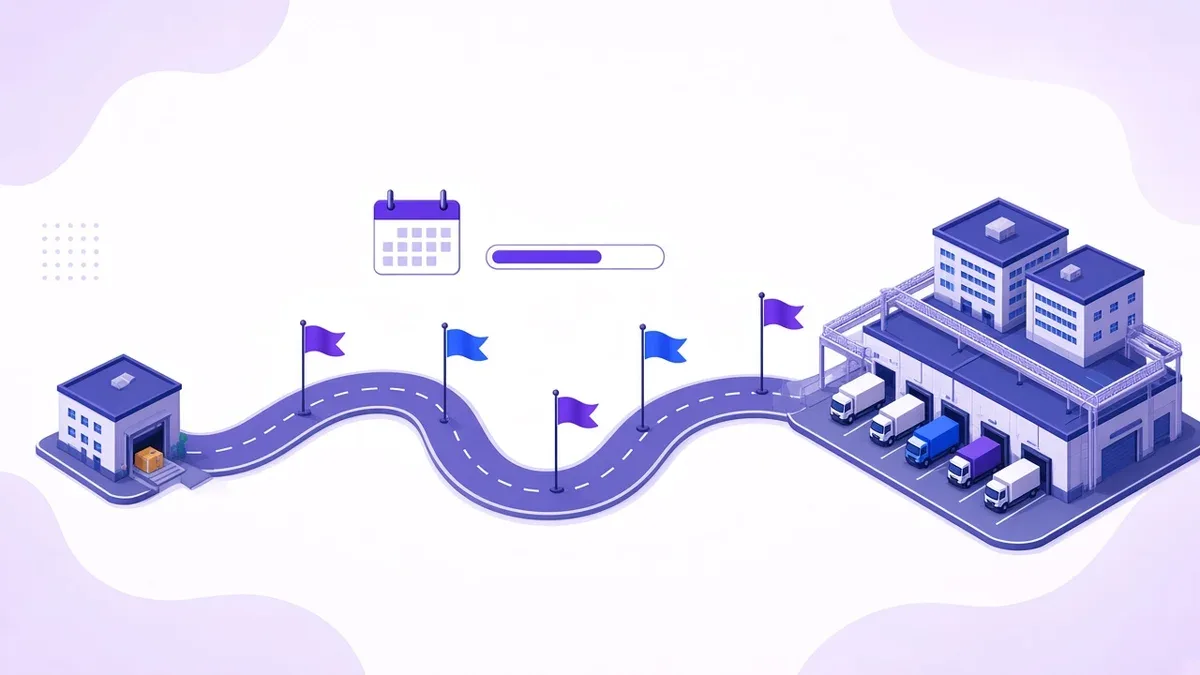
Run old and new processes side by side for at least a week at each phase. Never cut over during a sale season or festive peak. Keep the final payment until a full day of orders has moved from GRN to dispatch without a manual workaround. That one condition protects your warehouse management software development cost better than most contract clauses.
Choosing a WMS Partner and Avoiding Costly Mistakes
The right partner matters as much as the right features. A good team will walk your floor and ask about sites, SKUs, picking, channels and clients before it puts a number on your warehouse management software development cost. Be wary of anyone who quotes a fixed price after a ten-minute call. A rushed estimate almost always hides the real warehouse management software development cost in change requests.
Look for real warehouse experience. General app work isn't enough. Ask to see a live site running their software, ideally one like yours. Check how the scanner app behaves offline and whether the audit log can be edited. It shouldn't be.
Here are the mistakes that push warehouse management software development cost up the most:
Common mistakes to avoid
- ✗ Choosing the lowest quote without checking what's excluded
- ✗ Building before bin locations are marked on the floor
- ✗ Connecting every channel and courier in the first release
- ✗ Leaving 3PL billing rules until after launch
- ✗ Not getting source code and data ownership in writing
Get these in writing before you sign:
Quick checklist
- ☐ A module-wise scope
- ☐ Your integration list with costs
- ☐ Milestone-based payments
- ☐ Who owns the source code
- ☐ How you can export your data
- ☐ Warranty length
- ☐ Yearly support terms
A partner who tells you when not to build custom is usually one you can trust. If your warehouse sits inside a wider business system, it helps if the team also handles ERP development and stock sync with your accounts.

Get a Module-Wise WMS Estimate
If you are ready to turn your warehouse plans into a scoped first release, start with your sites, SKU count, daily orders, clients and the systems you need to connect. A short brief like that gives any qualified team enough context to give you an honest, like-for-like quote.
Conclusion: Budget for the Warehouse You'll Run in Three Years
Warehouse software doesn't have to be a guessing game. As a rough guide, a custom system for one warehouse might cost ₹4 lakh to ₹12 lakh. A multi-site setup often needs ₹12 lakh to ₹30 lakh, and a 3PL platform with billing ₹28 lakh or more. Your real warehouse management software development cost depends on your sites, clients, integrations and how you phase the rollout.
Keep it simple. Mark your bins, clean your SKU master, start with a lean first release and add billing and channels once the floor is stable. Compare every warehouse management software development cost quote by what's inside it, not just the final figure.
Want a clear, module-wise estimate for your warehouse or 3PL operation? Talk to the Softfix team and we'll help you scope a WMS that fits your budget and your way of working.
Keep reading: Custom software development cost in India · How to choose a custom software development company · Custom software vs off-the-shelf software
Related articles
 Industries
Logistics
Optimize supply chain operations with Softfix logistics software solutions. Automate fleet management, track shipments and streamline delivery workflows with custom technology.
Learn more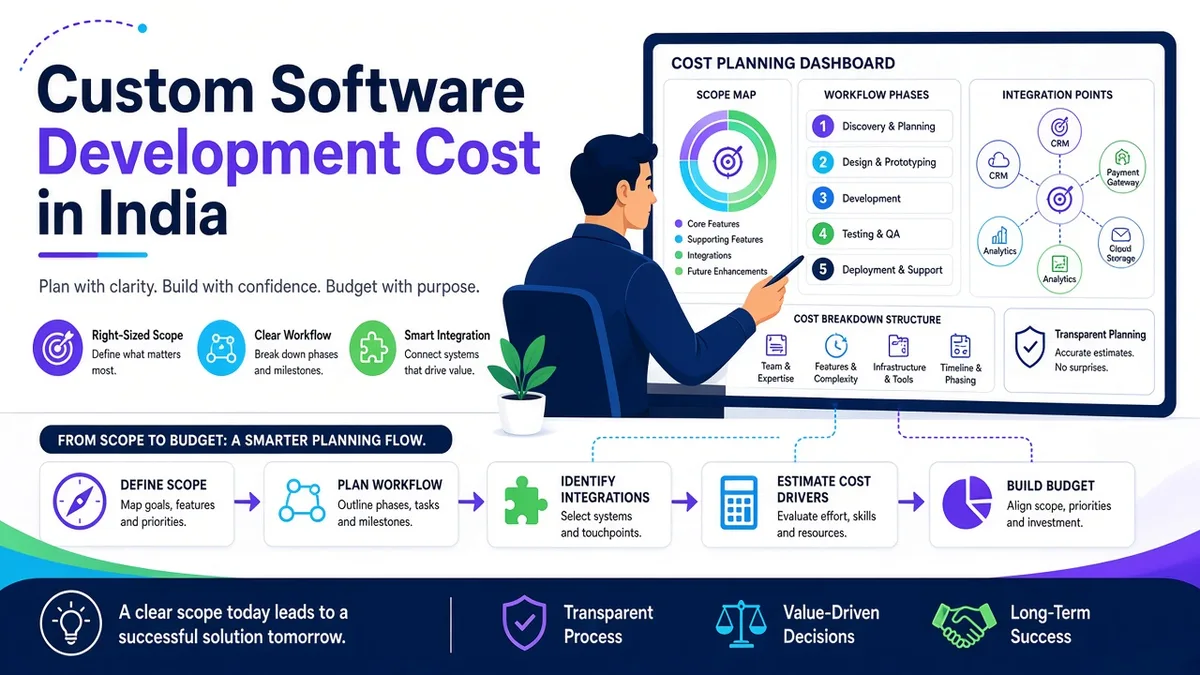 Articles
Custom software development cost in India
Learn what custom software costs in India, from MVPs to enterprise systems. See price ranges, cost factors and ways to save before you hire.
Learn more Articles
Custom software vs off-the-shelf software
Compare custom and off-the-shelf software on cost, speed, security and scalability. Use our checklist to decide what fits your business.
Learn more Articles
How to choose a custom software development company
Use this checklist to compare software vendors on experience, pricing, code ownership and support. Includes red flags and questions to ask.
Learn more